 +91 7483031199
- 0820-2589182
- info@sode-edu.in
- CET CODE-E206
- Career Opportunities
 +91 7483031199
 0820-2589182
 info@sode-edu.in

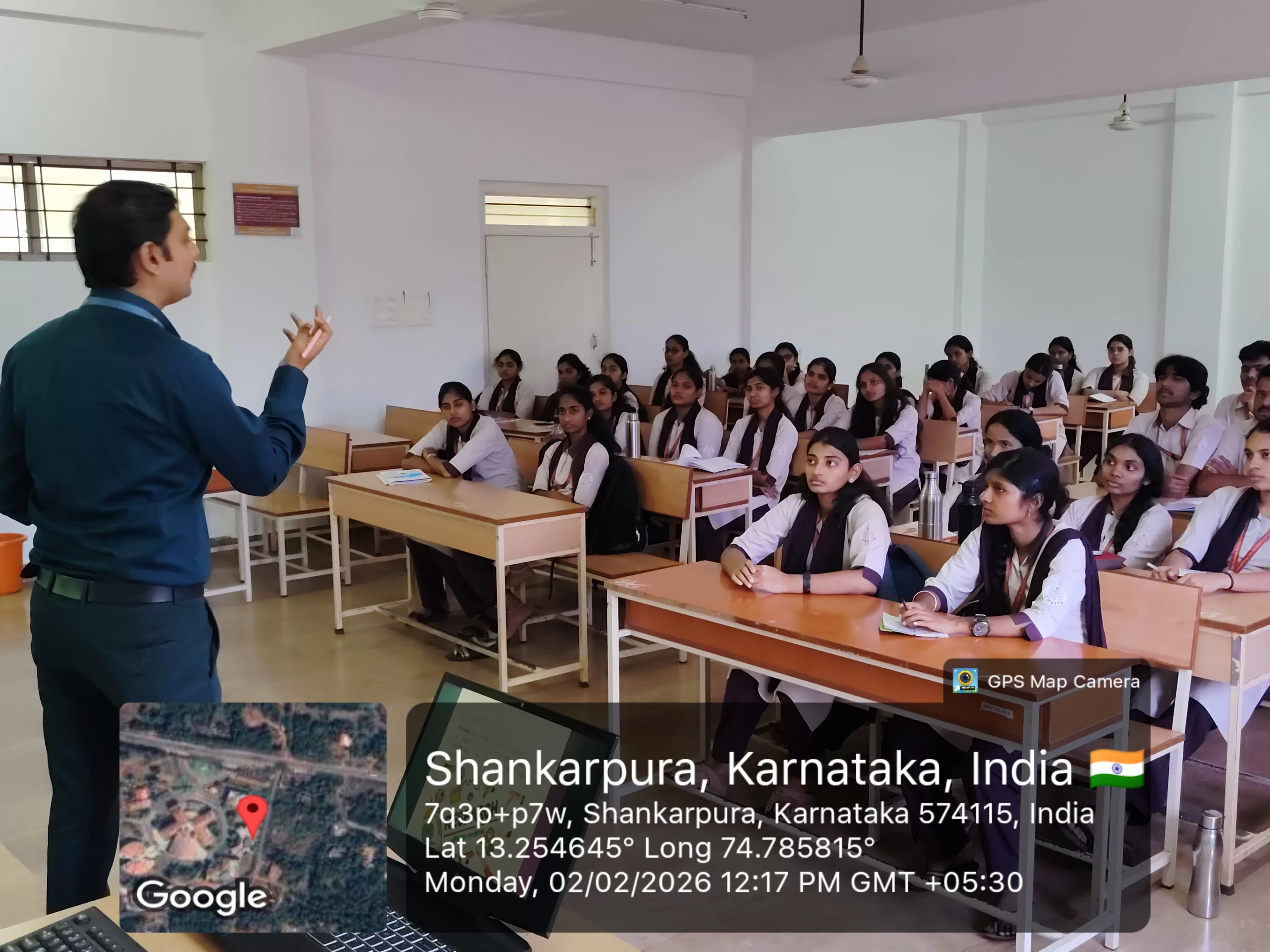 An expert talk titled “AI Frontier: Accelerating Research” was conducted for the 6th semester ECE students. The session focused on how AI-powered platforms can significantly support and accelerate the academic research lifecycle.
The talk began with an overview of research as a systematic and structured process aimed at discovering new knowledge and solving engineering problems. Students were guided on identifying research gaps and organizing their work using the standard IMRAD (Introduction, Methods, Results, and Discussion) structure commonly followed in conference and journal publications.
The resource person demonstrated various AI tools categorized based on their specific functions:
Literature Discovery:
Understanding Research Papers:
Automated Literature Review & Evidence-Based Answers:
Visualization & Collaboration:
Reference Management & Documentation:
Research Validation:
Scite.ai for verifying citation credibility and identifying retracted or unsupported research.
The session highlighted the importance of using validated sources, reliable citation metrics, and ethical AI usage to enhance research quality and productivity across engineering disciplines.
Outcomes / Key Takeaways
Systematic Research Workflow: Students understood the IMRAD structure and the importance of identifying research gaps.
AI-Driven Discovery: Participants learned to effectively use literature search and comprehension tools.
Automated Literature Synthesis: Exposure to AI-assisted evidence-based review platforms for faster analysis.
Research Mapping & Collaboration: Understanding visualization-based research exploration and networking tools.
Research Integrity & Management: Awareness of citation validation and structured reference management practices.
Conclusion
The expert talk successfully introduced students to modern AI-enabled research tools and structured research methodologies. The session motivated participants to adopt efficient, ethical, and technology-driven research practices, thereby improving the quality, credibility, and impact of their academic work.